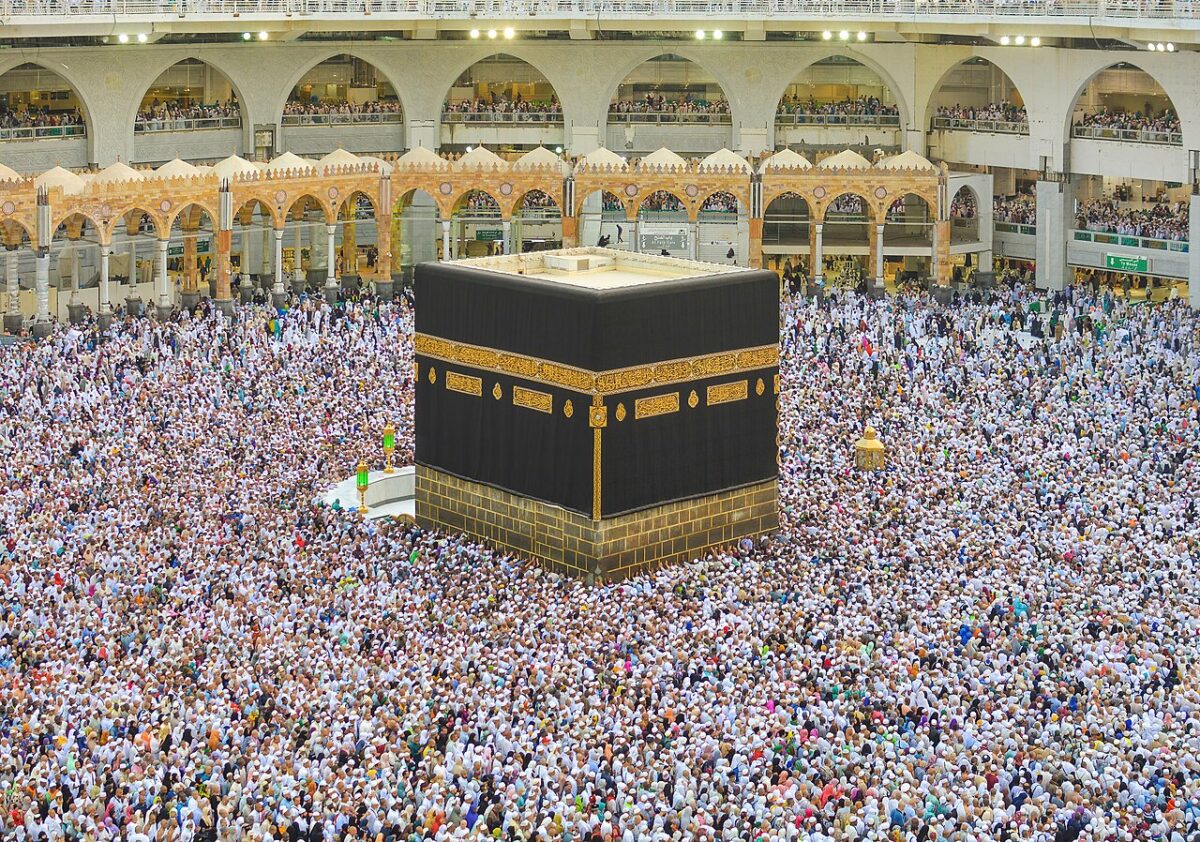
The Hajj pilgrimage to Mecca is one of the five pillars of Islam and a lifelong dream for many Muslims. All Muslims who are physically and financially able are expected to make the pilgrimage at least once in their lives.
This year, the Hajj falls in May, traditionally a safer and milder time of year than the scorching summer months of June to September, and 2 million people are expected to embark on the pilgrimage (Al Jazeera, 2026). The pilgrims often undertake walking long distances on a daily basis, making it much harder under extreme heat conditions.
The timing of the Hajj is determined by the Islamic lunar calendar. Hajj takes place every year during the month of Dhu al-Hijjah, the twelfth and final month of the Islamic calendar, with the main rituals occurring between the 8th and 13th days of that month. Because the Islamic calendar is based on the moon, it is about 10–11 days shorter than the solar Gregorian calendar used in most of the world. As a result, the dates of Hajj shift earlier each year relative to the seasons. Over a cycle of roughly 33 years, Hajj moves through every season from the cooler winter months to the extreme heat of summer (Yezli et al., 2024).
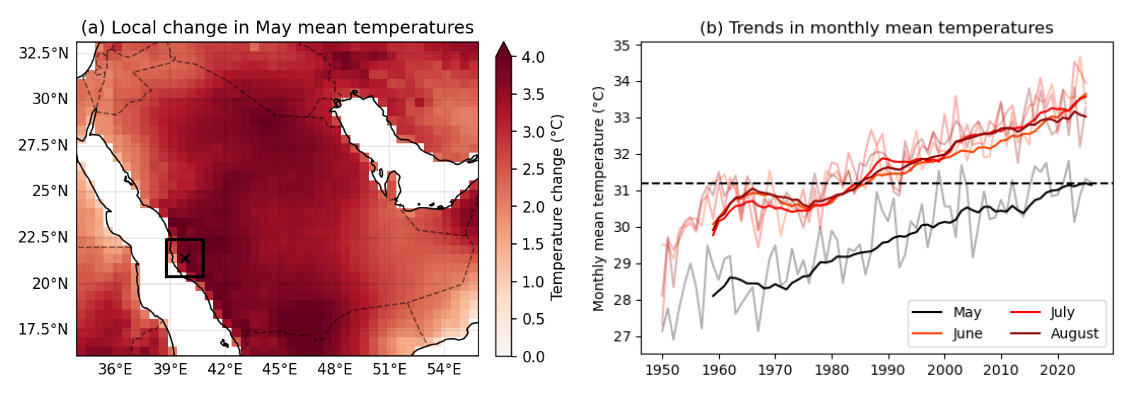
But climate change has altered those patterns. Temperatures in Saudi Arabia are rising earlier in the year and reaching more dangerous extremes, making the pilgrimage increasingly hazardous not only in the summer months, where in 2024 more than 1300 pilgrims lost their lives when Hajj started in mid-June temperatures reached 51°C (The Conversation, 2024), but even during the spring months (Figure 1).
In a super-rapid study researchers from World Weather Attribution show that for pilgrims who spend 20–30 hours outdoors, often walking in dense crowds, the risk of heat exhaustion and heat stroke is becoming far more severe earlier in the year, with temperatures now reaching heights in May that were only seen in June to August in the 1960s and 1970s, due to human-induced climate change.