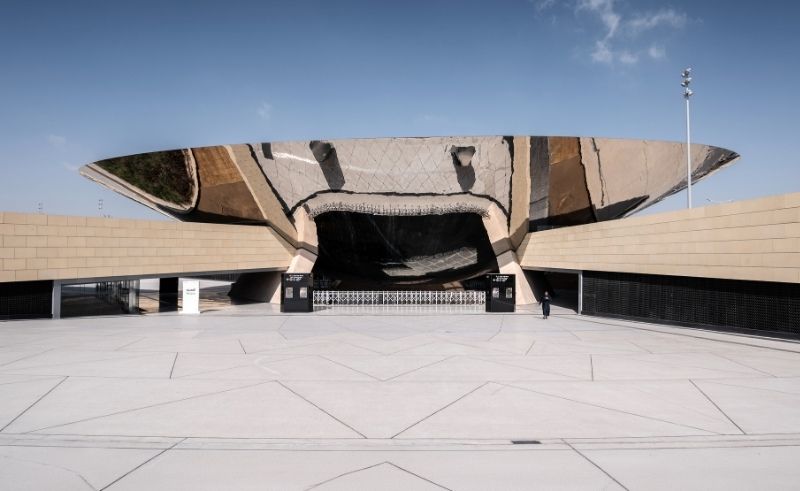
For Egyptian photographer Andrew Shenouda, Qasr Al Hokm Metro Station in Riyadh is read through movement, unfolding step by step as the space shifts around you and shaping how he documents the project.
He is drawn first to the history of the site, where traces of the old city are still present in the ground of Riyadh’s historic core.
“When you arrive, it feels like you are in a historical area, you see old architectural elements, stones, and several layers. As you move through the circulation, you feel a shift between history and future,” Shenouda tells SceneHome. His documentation follows this movement using a handheld approach at human scale, focusing on how the space is experienced while moving through it.
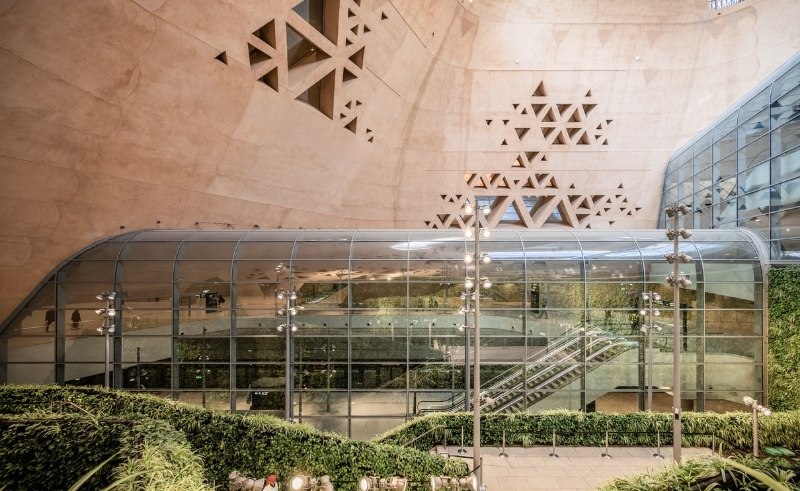
The site is shaped by the memory of the 18th-century city walls that once enclosed Riyadh before being removed during expansion. Even without their physical presence, this idea still informs how the space is organised and how it is read.
Shenouda’s arrival images place the station within this context, using wide frames that hold stone, planting, and the building together in one view. The canopy reflects parts of the site, bringing the surrounding landscape and structure into the same frame, while keeping the scale of people and space visible. More