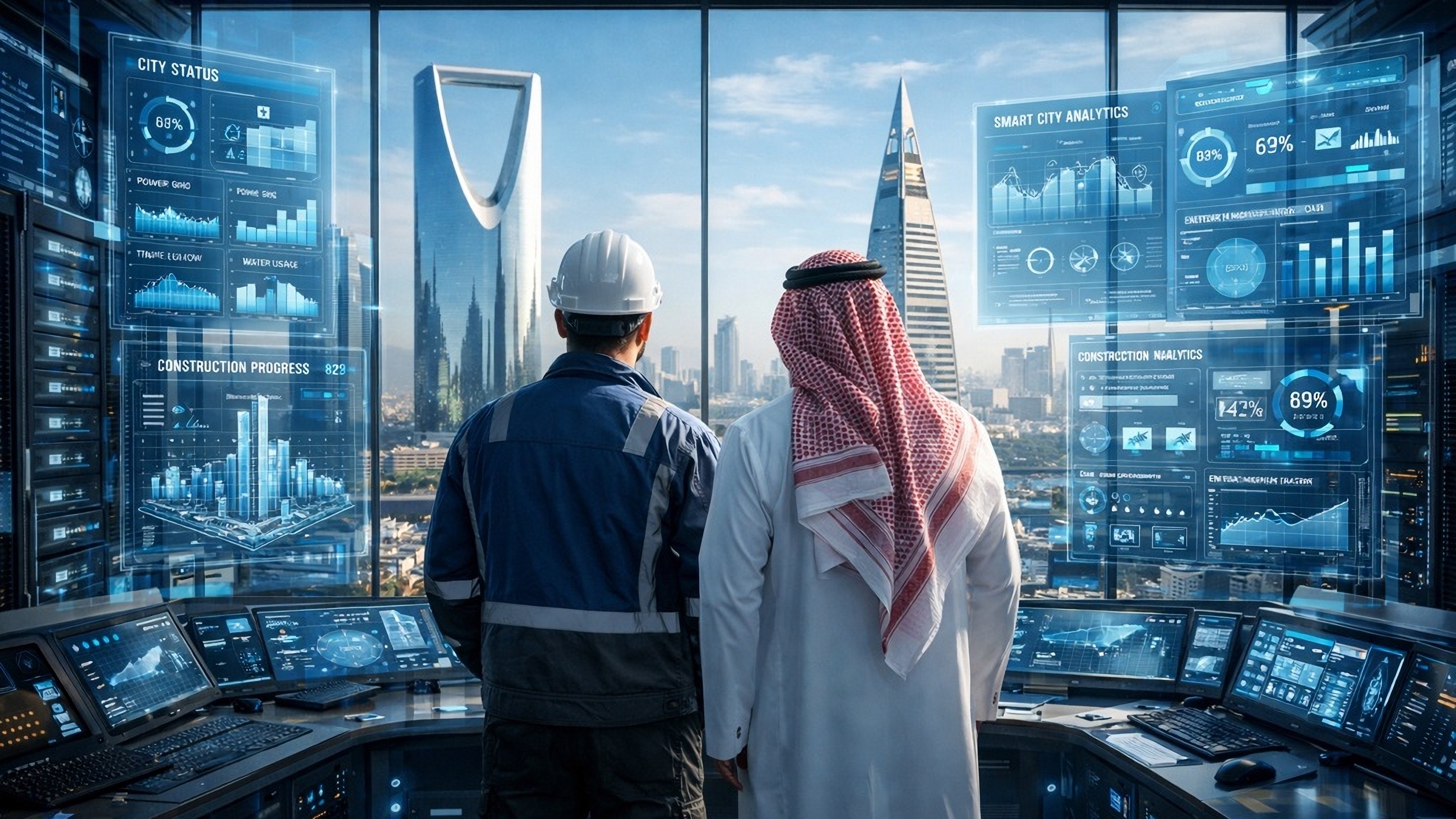
A decade after its unveiling, and as its official completion deadline approaches: Where does the project designed to bring comprehensive change to the Saudi Kingdom stand—and how has it been impacted by recent regional events?
Since its unveiling in April 2016, Vision 2030 has served as the umbrella brand of Saudi Arabia’s national transformation. A legacy-defining gambit of Crown Prince Mohammad bin Salman, the reform plan seeks to rearchitect an oil-dependent economy while future-proofing an absolutist monarchical system. Nearly a decade into implementation, and with its formal deadline approaching, Vision 2030 has yielded stuttering economic gains alongside political and social achievements.
In recent years, the project itself underwent significant reorganization. And now, with the shockwaves of regional war reverberating throughout the region, Vision 2030 appears set to enter its third iteration.
The brainchild of bin Salman, Vision 2030 aimed to revolutionize an economy facing unprecedented threat. Despite talk of reform dating back to the 1970s, Saudi Arabia entered the 2010s overwhelmingly reliant on oil revenues. Under the mounting strains of population growth, accelerating energy transition, and volatile energy prices, economic diversification transformed into a paramount—indeed existential—policy priority. To prepare for a future of reduced oil wealth, Vision 2030 emphasized fiscal reforms and the growth of new sectors from tourism to advanced manufacturing, overhauling a model of bloated public employment and generous subsidies. Yet from the outset, Vision 2030 was unmistakably political, with the plan’s diversification agenda conditioned on the centralization of power.
During the second half of the 2010s, bin Salman dismantled rival power centers within Saudi Arabia’s royal family, subordinated the religious establishment, and purged key state institutions. Having seized unprecedented political might by the decade’s final years, the crown prince set upon reformulating the kingdom’s ultraconservative social order.
The wisdom of incremental social reform that guided Saudi leaders before him—informed by a history of fierce grassroots and institutional backlash to relaxed social strictures—was discarded in favor of sweeping change. Saudis woke to a transformed society: restaurants and shops began operating during the call to prayer; young men and women flocked to newly established entertainment venues; women took to the roads for the first time, and then to the labor market; and now, the government is reportedly experimenting with legal access to alcohol. To bin Salman, these expanded freedoms were necessary for both reclaiming legitimacy among younger Saudis and for redefining the kingdom’s global image—an essential component of achieving the scale of international buy-in required for Vision 2030’s success.
For all of the reform plan’s political and social advances, however, oil remains the unambiguous backbone of the Saudi economy. In 2025, hydrocarbons accounted for roughly 45 percent of GDP. Non-oil growth appears driven primarily by oil market dynamics rather than Vision diversification efforts, with sectoral increases accumulating at a slower rate than pre-Vision years, when oil prices were higher. Stalling productivity has demanded heavier government spending to fuel non-oil revenue gains, producing a persistent budget deficit since 2022.
Key to understanding its achievements and shortcomings, Vision 2030’s evolution falls into three chapters marked by distinct development priorities. More